Being caught in a house fire is almost too frightening to think about. But sadly, firefighters have to fight thousands of building fires every year. To escape a house fire, early warning is vital. That’s why every home in Australia needs a smoke alarm.
But with several different types of alarms out there, it can be confusing to know which ones you need in your house. Read on for information that will set you straight – and hopefully prevent you from having to wave the tea towel at a screaming alarm every time you burn your toast.
Types of smoke alarms
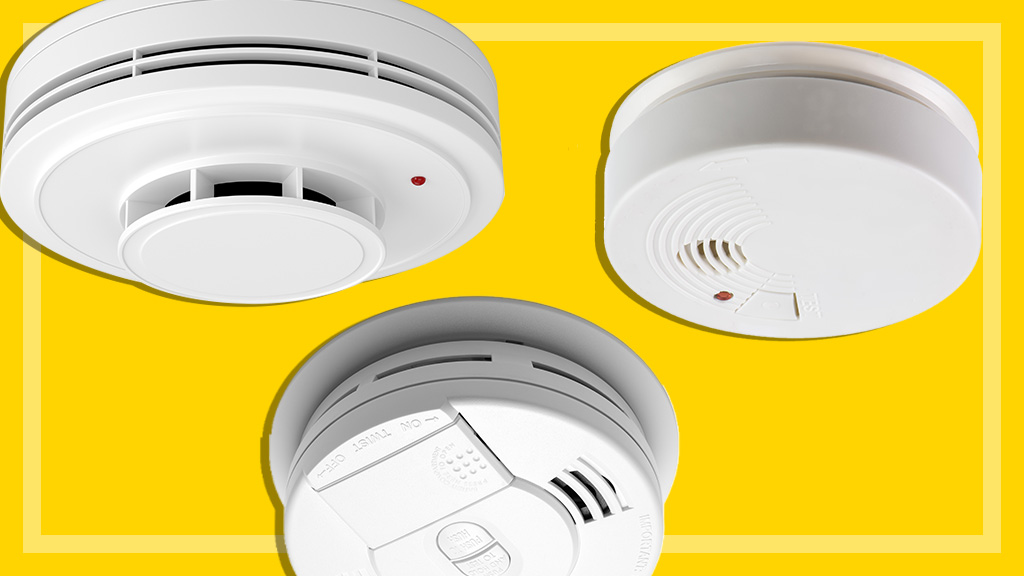
There are two main types of smoke alarm for home use: ionisation and photoelectric alarms.
Ionisation alarms
These contain a very small amount of radioactive material, which reacts to particles emitted in a fire and sets off the alarm. Ionisation alarms are best at detecting fast-flaming fires that don’t emit much visible smoke. But many house fires tend to be smoky and smouldering long before they flare into flame, and ionisation alarms aren’t as quick at detecting these. They can also be prone to nuisance alarms from cooking and steam, so shouldn’t be located near your kitchen or bathroom.
Photoelectric alarms
These contain a photo cell and a light beam shining away from the cell. When smoke enters the test chamber, some of the light is scattered by the smoke particles and hits the cell, triggering the alarm. Photoelectric alarms are best at detecting smoky and smouldering fires, which is a common type of house fire. Dust or insects entering the unit can cause false alarms, so they have to be cleaned occasionally.
Dual sensor alarms
These contain both an ionisation sensor and a photoelectric sensor, and so they get the best and worst features of both types. They can be a good option but as with any ionisation alarm, don’t install them near a kitchen or bathroom.
Other types of alarms
There are two other types of home alarms that are useful for particular situations:
Carbon monoxide alarms – often used to ensure safe operation of central heating systems. Carbon monoxide is a waste product of gas heating, so if you have gas heating (whether ducted or an unflued gas heater) it’s worth installing a carbon monoxide alarm, in case the heater develops a fault and the waste carbon monoxide gets into your home at dangerous levels.
Heat alarms – ideal for kitchens as they detect heat rather than smoke, so aren’t prone to nuisance alarms from cooking fumes.
Even if you have one of these specialised alarms, you should always have standard smoke alarms as well.
When we previously tested smoke alarms, our CHOICE experts found that photoelectric alarms were the best type for homes, as recommended by most fire authorities. Photoelectric smoke alarms are usually much faster at detecting smoke from smouldering synthetic material than ionisation alarms. In a typical house fire, burning material smoulders and smokes for a long time (possibly a few hours) before flaring into flames.
It’s crucial to detect the fire early in the smouldering phase so you can deal with the fire or escape the house; the longer the fire goes on, the more smoke can fill the home and become an inhalation and visibility hazard.
Studies have shown that photoelectric alarms typically respond to smoky fires within about three to five minutes. Ionisation alarms can take much longer – up to 20 minutes or more – by which time escape can be much more difficult.
CHOICE tests previously showed that some ionisation alarms can respond quickly to smouldering fires, including smouldering synthetic material such as polyurethane foam, though generally photoelectric alarms outperform them in this situation.
While ionisation alarms can give a useful additional level of fire protection, they should not be the only type you have in your home
Our previous tests also showed that ionisation alarms are also usually very quick to detect flaming fires, but a common scenario for this type of fire in the home is a cooking fire when you are likely to be nearby and see the fire yourself anyway. However, because of the way they work, ionisation alarms tend to be more prone to nuisance alarms caused by cooking fumes or burnt toast.
So while ionisation alarms can give a useful additional level of fire protection, they should not be the only type you have in your home.
Dual sensor alarms (which contain both ionisation and photoelectric sensors) are also worth considering, provided they aren’t installed in a location (such as near a kitchen) where the ionisation sensor could be prone to nuisance alarms from cooking.
No smoke alarm can actually tell the difference between nuisance smoke and a real fire; the challenge is to get the sensitivity just right.
What to look for in a smoke alarm
Standards Australia certification or ActivFire registration
This ensures the alarm complies with the Australian Standard for smoke alarms, AS 3786, as required by law. Note that different states may specify different versions of the standard. The CSIRO ActivFire Scheme is an independently operated product certification and listing scheme.
10-year battery
Some models come with a pre-installed non-removable 10-year battery, typically a lithium battery, which will last for the life of the smoke alarm. This means you don’t need to remember to change the battery each year.
Test button
This allows you to check the alarm is working. Some models can be tested by shining a torch on the alarm, or by using a household remote control (such as a TV remote). This eliminates the need to climb a ladder or reach up with a broom handle to press a button – especially good for high ceilings or if you’re not very mobile.
Hush button
Pressing this button silences nuisance alarms for a few minutes – handy if you’ve burnt the toast and set off the alarm, as it gives you some quiet while the smoke dissipates. Some alarms can even be silenced by remote control.
Battery test
Battery-powered models should monitor their own battery level and warn you when the battery needs changing by beeping every few seconds.
Escape light
Some models feature a light that turns on when the alarm is activated. This is helpful if there’s a power failure during a fire, as it can guide you out of the house.
Interconnection
Most mains-powered and some battery-powered alarms can be connected to each other, so that if one goes off, so do the rest, helping ensure that everyone in the home is alerted as soon as possible.
Features for people who are hard of hearing or deaf
For people who are deaf or hard of hearing, there are special products available such as ultra-loud alarms, strobe lights, and vibrating pads for your bed. For details, contact your state’s Deaf Society, Independent Living Centre or fire brigade.
Insect screen
Most modern smoke alarms have insect screens to help prevent insects setting off false alarms. But it’s worth giving the smoke alarms a clean with a vacuum cleaner every once in a while to ensure dust hasn’t built up in the air inlets, as it could set off nuisance alarms or even reduce the alarm’s effectiveness at detecting smoke.
What’s the law about smoke alarms?
Smoke alarms are legally required for most residences in Australia. Each state and territory have different requirements, so please check your state’s current requirements when replacing a smoke alarm, or when building or renovating. While the minimum may be one alarm per home, more alarms might be required depending on the layout of the home. Click the state name for links to relevant state authorities and regulations.
Smoke alarms are just one part of keeping your home and your family safe in the event of a fire. Also consider these ideas:
A fire blanket in the kitchen for dealing with a cooktop fire
A fire extinguisher to put out small fires before they get out of control
An escape plan, which all residents are familiar with, so everyone knows what to do in the event of a fire, the best way to evacuate, and where to gather outside the home.
Cost of smoke alarms
A basic ionisation alarm can be very cheap – from under $10. A fancier model can be closer to $50. Photoelectric alarms can be found for less than $20, but can cost up to $100. Most smoke alarms should be replaced every 10 years.
Chris Barnes is a Senior Project Officer. He manages the product reviews that are done outside of CHOICE with external labs or data sources. This includes solar panels, electric heaters, air purifiers and detergents.
Chris also manages our testing services through our commercial arm, Test Research, and he is CHOICE's NATA authorised representative for our lab's formal accreditations.
Chris is involved with the standards committee for air conditioners. And he works with government and industry in areas such as product safety and regulation.
In over 20 years at CHOICE, Chris has managed lab teams for a wide range of products, including children's products, kitchen appliances, laundry appliances, garden power tools and more. Chris has a Science degree from the University of Sydney. LinkedIn
Chris Barnes is a Senior Project Officer. He manages the product reviews that are done outside of CHOICE with external labs or data sources. This includes solar panels, electric heaters, air purifiers and detergents.
Chris also manages our testing services through our commercial arm, Test Research, and he is CHOICE's NATA authorised representative for our lab's formal accreditations.
Chris is involved with the standards committee for air conditioners. And he works with government and industry in areas such as product safety and regulation.
In over 20 years at CHOICE, Chris has managed lab teams for a wide range of products, including children's products, kitchen appliances, laundry appliances, garden power tools and more. Chris has a Science degree from the University of Sydney. LinkedIn
For more than 60 years, CHOICE has been fighting the good fight for Australian consumers.
In the past year alone we've uncovered systemic issues with sunscreens, investigated shonky supermarket pricing, fought for stronger scam protections and helped make complex energy pricing fairer and clearer.
CHOICE is here to provide unbiased advice and independent testing in our world-class labs. We buy the products we test, just like you do, and our expert reviews are influence free. We’re here to help you choose smarter. Hopefully you’ll also save some money along the way.
Thanks to CHOICE, you’ll never be alone when a business treats you unfairly. You can support our work by joining or donating to our cause.